
Beneath the wild, rugged coastline of Kangaroo Island, the aftermath of South Australia’s harmful algal bloom is slowly becoming clearer. Stefan Andrews, co-founder of the Great Southern Reef Foundation (GSRF), led a series of dives with Research And Discovery Coastal Tours Kangaroo Island (RAD KI) off Kangaroo Island’s north coast to document the reefs’ condition. Through its tours, RADKI blends exploration with citizen science, giving visitors the chance to take part in research while discovering the island’s unique wildlife and landscapes. The GSRF is a not-for-profit organisation run by an independent team dedicated to the recognition and long-term health of the Great Southern Reef, acting as stewards in education, community engagement and science.
Harmful algal blooms occur when microscopic algae grow rapidly, fuelled by warmer seas and excess nutrients. They can release toxins and reduce oxygen, putting fish, reefs and other marine life at risk. This recent bloom has been one of South Australia’s most widespread and damaging, raising concern among scientists, fisheries, marine operators and the community.
SeaLink was proud to support Stefan’s travel to and from the island, under our Community Support initiatives. These form part of our broader commitment to marine conservation and our support for organisations like the Great Southern Reef Foundation, ensuring Kangaroo Island’s unique ecosystems continue to thrive.
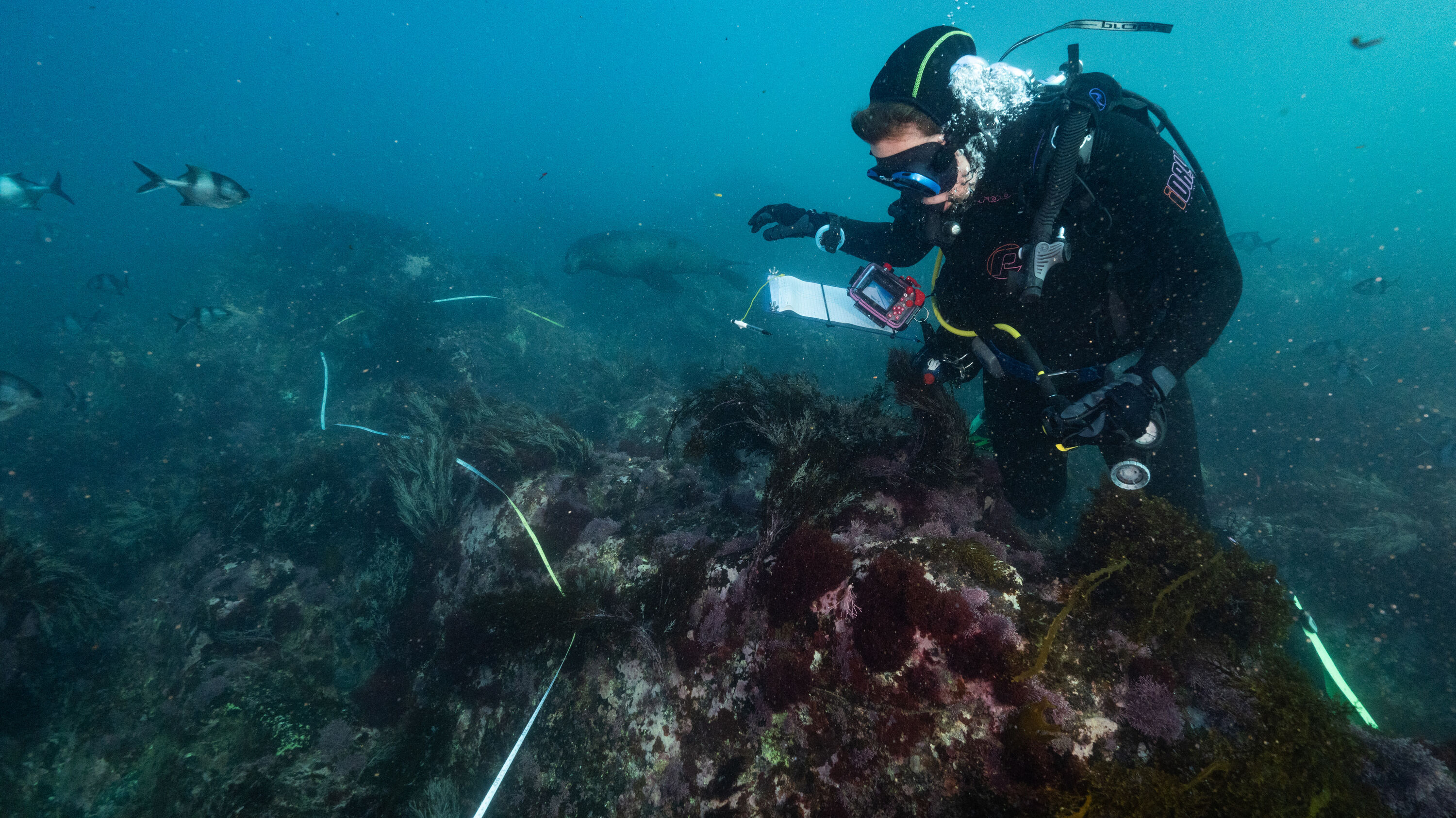
Diver from the Great Southern Reef Foundation surveying reefs (credit: GSRF)
He anticipated highly degraded conditions before the dives. Visibility remained poor in places, though much of the surface foam linked to the bloom had cleared. Below the surface, surveys revealed a combination of damage and isolated signs of survival.
A weedy seadragon, a vulnerable species that has suffered catastrophic losses from Gulf St Vincent reefs, was still spotted among the deeper rocky reefs. He also reported active dens of rock lobsters, a reassuring sign that parts of the ecosystem remain functioning.
"We expected the worst, but we found hope among the damage." Stefan Andrews, Great Southern Reef Foundation.
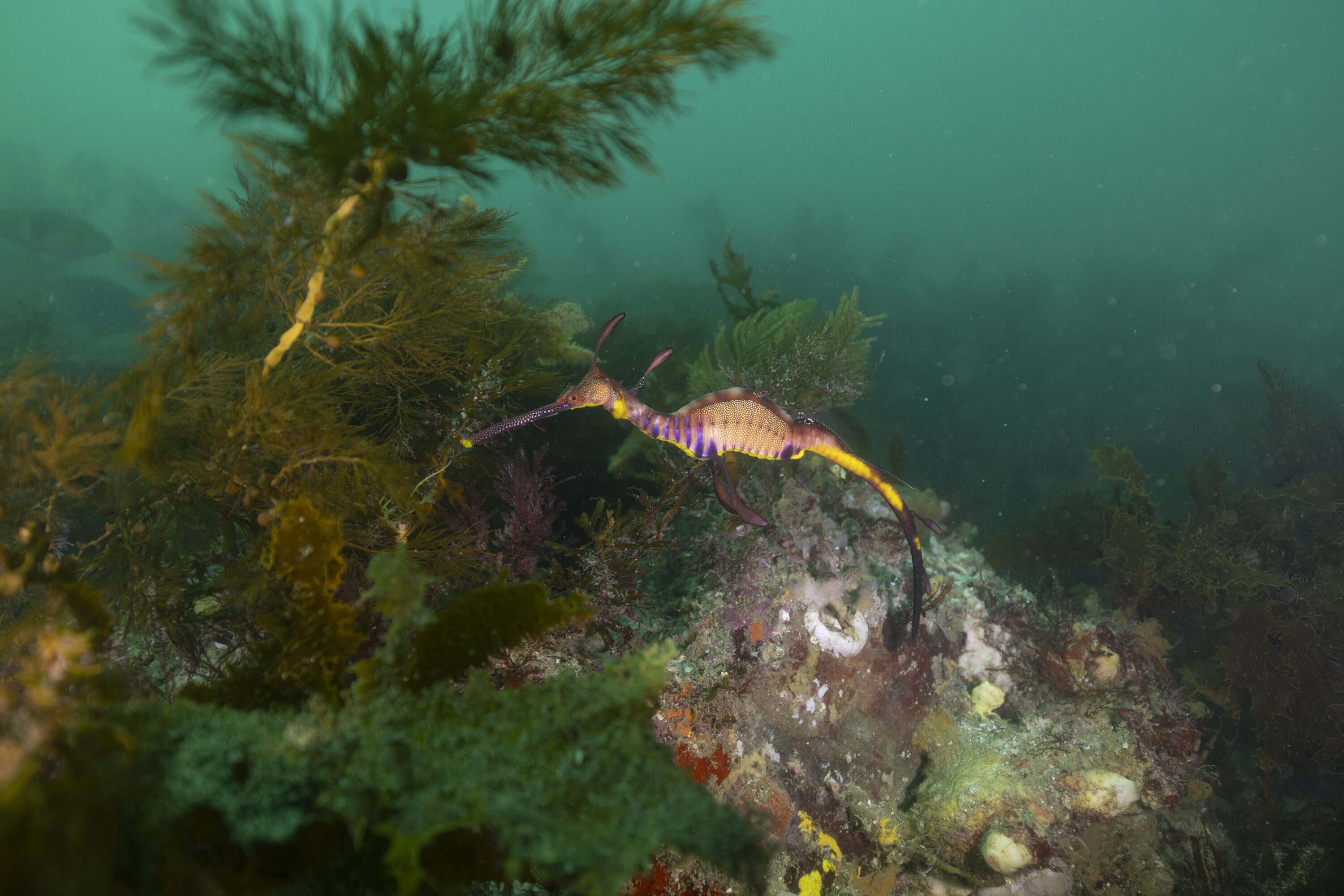
Weedy seadragon spotted amidst the reefs (credit: GSRF)
Many species showed signs of impact. Sea sponges and filter feeders were visibly damaged, while kelp and seaweed beds ranged from healthy in some spots to stripped back in others. Fish were still present, but it is unclear how their populations will cope in the long run.
Impact on Island Tourism
While marine life has been most affected, the bloom has also impacted marine-based tourism operators and businesses on the island and across the state. Many, such as oyster farmers, fisheries and ocean-based tour operators, rely on a healthy marine ecosystem for their livelihood.
For the Kangaroo Island Tourism Alliance (KITA), the Regional Tourism Organisation, supporting marine tourism operators remains a key focus as they navigate these challenges. Marine experiences are a vital part of Kangaroo Island’s tourism offering, and essential to protect and maintain visitor confidence heading into the summer tourist season.
KITA’s Regional Tourism Manager, Megan Harvie, stressed the importance of reassuring both visitors and locals:
"We are working closely with our partners and relevant agencies to ensure that accurate and reassuring information is available to the public. Ensuring our guests feel confident and safe to enjoy the marine environment is a current priority.” she said.
Encouragingly, there are signs that the event could be easing with the water clarity improving, discolouration reducing and local fishers catching the highly sought-after King George Whiting in the waters.
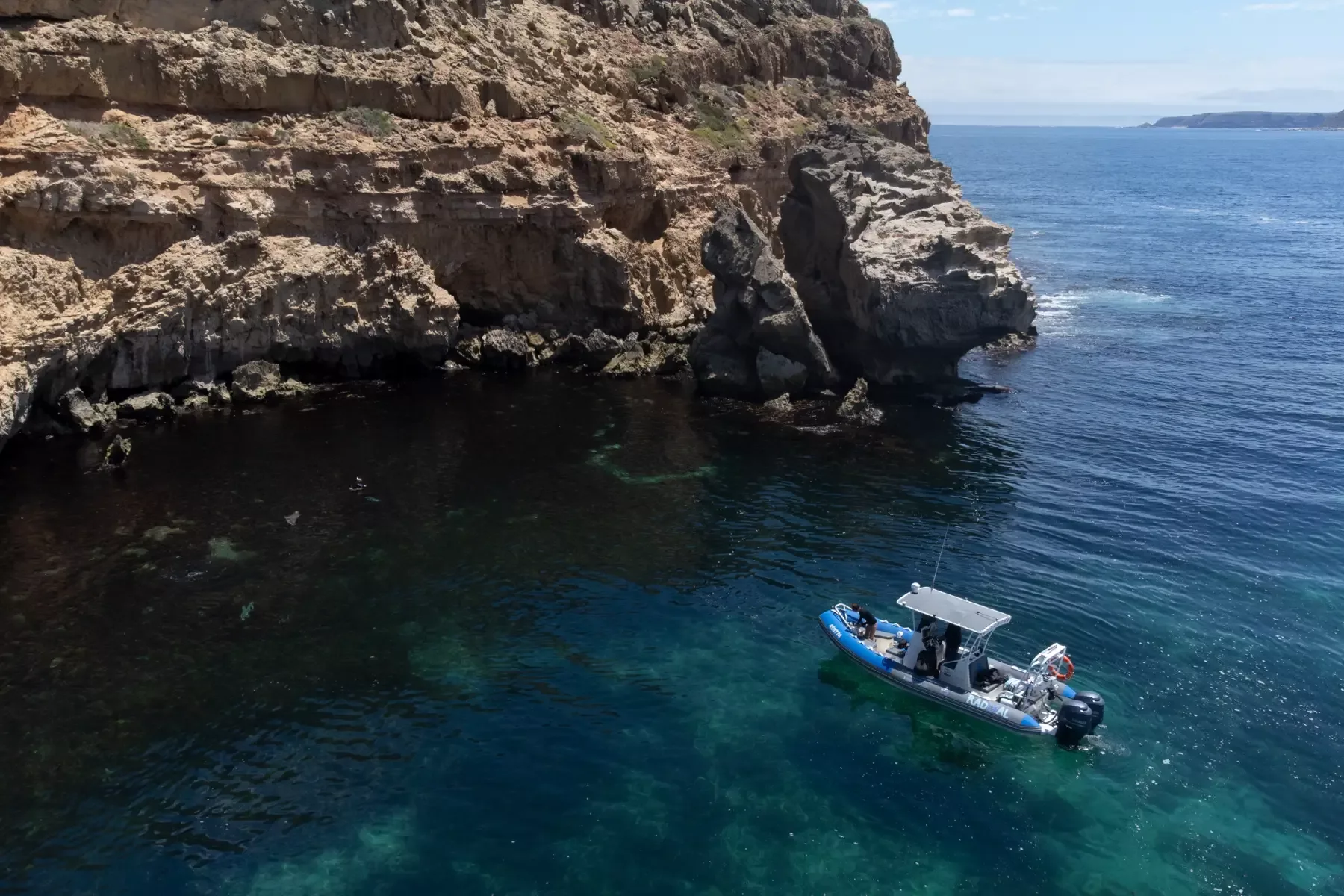
RAD KI provided vessels for the underwater dives (credit: Research and Discovery Coastal Tours KI)
The Path Ahead
The road to recovery will take time. Stefan believes the next six months are going to be crucial and is planning further dives for monitoring sites. There’s a real possibility there could be another bloom this coming summer, and we may not see recovery of the slower-growing fauna for years.
But there is hope in action. Deeper waters off Kangaroo Island where more currents mix with open ocean will hopefully serve as refuges for some species.
Oyster reef restoration initiatives are being carried out all over the island to enhance water quality, cut down on excess nutrients, and provide better living conditions for marine life. For long-term recovery, KITA continues to support island businesses access government resources and available funding.
Kangaroo Island’s reefs are more than just marine ecosystems, they are part of the island’s identity, economy and tourism appeal. By supporting research, restoration and community involvement, we can give these habitats the best chance of recovery. SeaLink is proud to play a role in this shared effort, helping ensure that future generations can experience the magic of Kangaroo Island’s marine wonders.
Get Involved
- Learn more about the Great Southern Reef Foundation and its work at greatsouthernreef.com.
- See how you can play your part in sustainable travel practices and Citizen Science Passport to Recovery program when visiting Kangaroo Island.

