

There is nothing quite like spotting a whale from the coast.
One moment you are looking out at an empty stretch of water. The next, you see a burst of spray, the curve of a dark back or, if you are lucky, a tail slipping beneath the surface.
Along Kangaroo Island and the Fleurieu Coast, whale season usually runs from May to October, with June to September often offering the best chance of a sighting.
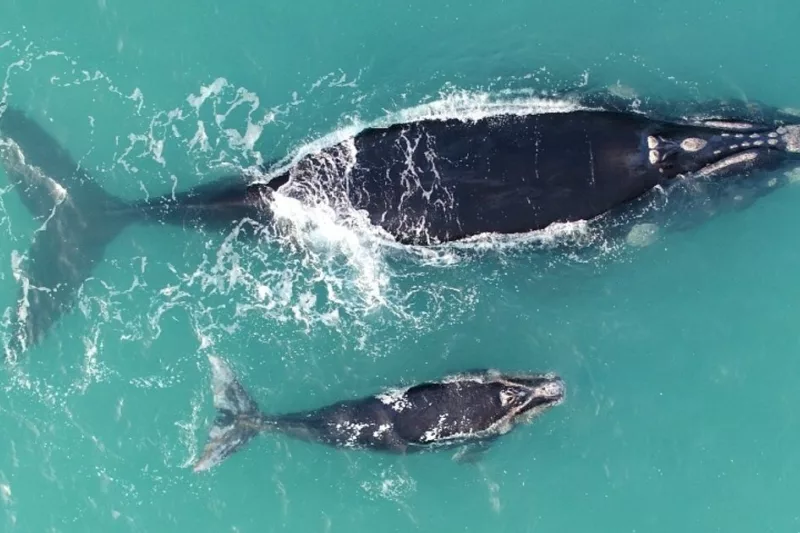
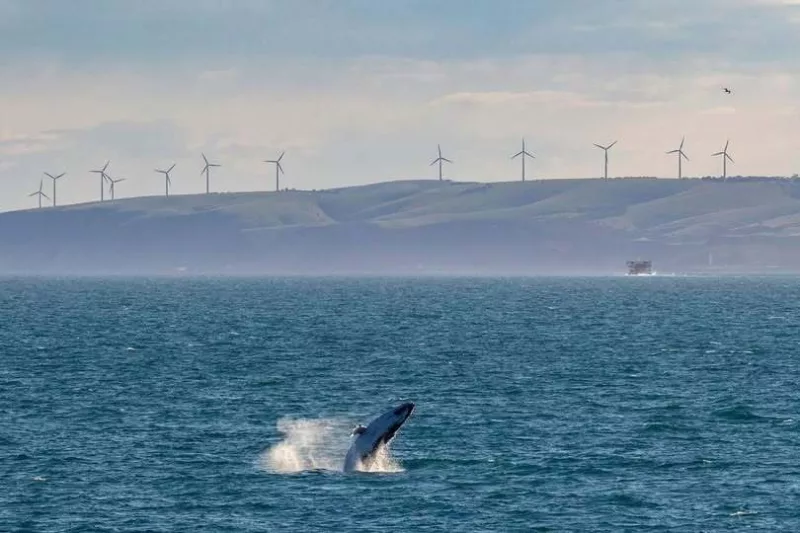
Southern right whales and humpback whales are the species most common in the area.
Both have unique characteristics and present in different ways. Southern right whales often move slowly through sheltered waters, while humpbacks are more likely to put on a show with breaches, splashes and tail slaps.
When is the best time to spot them?
Whales can begin appearing in May as they travel north from colder waters.
Sightings usually pick up through June, July and August. This is also the time when southern right whales may be seen resting in bays or travelling with calves.
September is still a very good month, particularly as whales begin heading south again. By October, sightings are less frequent, but they are still possible.
Weather matters too. Calm, clear days make it much easier to spot movement on the water. Strong winds and choppy seas can make even a nearby whale difficult to see.
Whale watching is much easier when you know where whales have recently been seen.
The South Australian Whale Centre in Victor Harbor maintains an online whale sighting log, with reports from Encounter Bay, Kangaroo Island and other parts of the South Australian coastline.
Check the log on the morning of your trip and pay attention to:
- where the whale was reported
- the date and time of the sighting
- the species, if identified
- whether a calf was present
- the direction the whale was travelling
A sighting does not mean the whale will still be there when you arrive, but several recent reports from the same area can give you a useful place to start.
Whale watching on Kangaroo Island
Kangaroo Island offers a quieter and more rugged whale watching experience.
There is no single place where whales are guaranteed to appear. More often, sightings happen while you are walking along the coast, stopping at a lookout or simply spending time near the water.
Flinders Chase National Park
The western end of the island is one of the best areas for wide ocean views. Lookouts around Flinders Chase National Park give you a good chance to scan the Southern Ocean, especially around Remarkable Rocks and Admirals Arch.
The weather can be wild here, even on a clear day, so bring warm layers and stay well back from cliff edges.
Cape Borda
Cape Borda sits on the north-western side of the island and looks out across Investigator Strait.
Whales passing through the area may be visible from the cliffs, although they are often some distance offshore. Binoculars are worth bringing.
Penneshaw and Dudley Peninsula
The waters around Penneshaw are more sheltered than the island’s southern coast.
Wildlife cruises operate in the area and may come across whales during the season. Even when whales do not appear, there is still a good chance of seeing dolphins, seals and seabirds.
Cape Jervis
Cape Jervis overlooks Backstairs Passage between the mainland and Kangaroo Island.
It is a good place to watch out for whales moving through the area, especially on a calm day. The views are broad, so binoculars will help. And if you're lucky, you could spot a whale or two while on the ferry crossing to and from Kangaroo Island!
Whale watching spots along the Fleurieu Coastline
Second Valley, Rapid Bay and Normanville
The coastline around Second Valley and Rapid Bay is well worth exploring during whale season. Sightings may not be as regular as they are around Encounter Bay, but the rocky headlands and open views make these good places to stop and look.
The beaches around Normanville and Carrickalinga offer a more relaxed setting. From sea level, whales can be harder to spot, so take your time and watch for spray on the horizon.
Victor Harbor, Encounter Bay and Goolwa
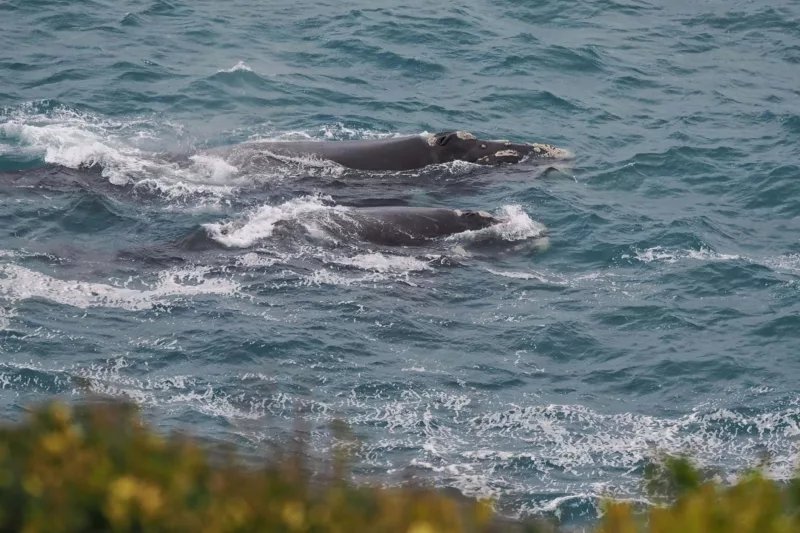
For the best chance of seeing whales on the Fleurieu Peninsula, Victor Harbor and Encounter Bay are usually the places to start. Southern right whales often visit the bay during winter and may come surprisingly close to shore.
Good viewing spots include The Bluff, Granite Island, Freeman Lookout, Middleton and Basham Beach.
Boat tours run in the area during the season, which could be a good opportunity to encounter a whale on the water, although sightings always depend on the day’s conditions.
Tips for spotting whales
- Whale watching usually involves more waiting than action.
- Find a lookout with a wide view, stand still for a while and scan the water slowly.
- Look for a burst of spray, a dark back breaking the surface or repeated splashes in the same area. A whale’s blow is often the first thing you will notice.
- Once you see movement, keep watching that section of water. Whales may surface several times before diving.
- Bring binoculars, warm layers, sturdy shoes and a waterproof jacket. Conditions can change quickly, especially on the island’s western and southern coasts.
- Always stay behind barriers and keep away from unstable cliff edges.
A winter experience worth slowing down for
Whale watching is not always dramatic.
Sometimes it is just a distant blow or a brief glimpse of a back before the water goes still again.
But that is part of the appeal. You have to stop, look and wait.
Between May and October, the coast around Kangaroo Island and the Fleurieu Peninsula becomes one of the best places in South Australia to do exactly that.

